Clinicians and Fertility Specialists
Clinical Embryologists, Andrologists and Geneticists
IVF Units
IVF Managers

Training

Special trainings on:
ICSI,Vitrification, Embryo Biopsy, Testicular, issue processing, Risk management
Open for Enrollment
Duration: 2 days

Non-Obstructive Azoospermia: Management and Challenges in the ART Lab

Date: 19-20th September 2026 Master testicular sperm retrieval workflows with expert guidance This intensive 2-day hands-on workshop provides personalized training focused on the laboratory management of severe male infertility and TESE-related procedures. By combining essential theory with extensive practical laboratory training,

Open for Enrollment
Duration: 2 days

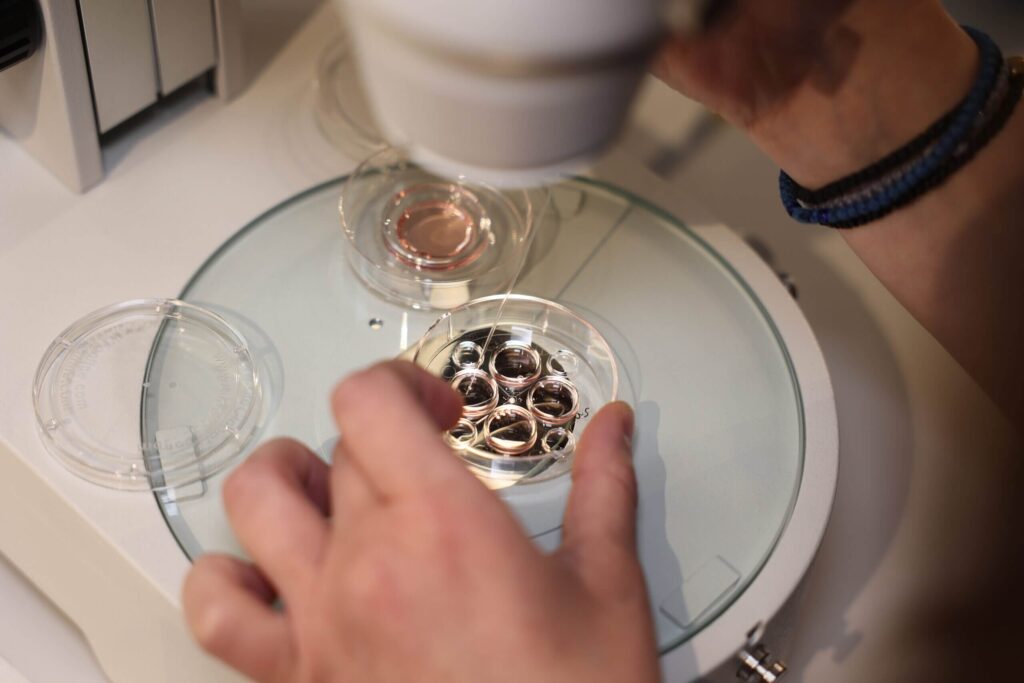
Blastocyst Biopsy and Tubing Hands-On Training

Date: 14-15th November 2026 Master the art of embryo biopsy with expert guidance. This intensive 2-day hands-on workshop provides personalized training in blastocyst (trophectoderm) biopsy and tubing. Combining focused theory with extensive laboratory practice, the course is designed to strengthen your
Upon Request
Duration: 1 day

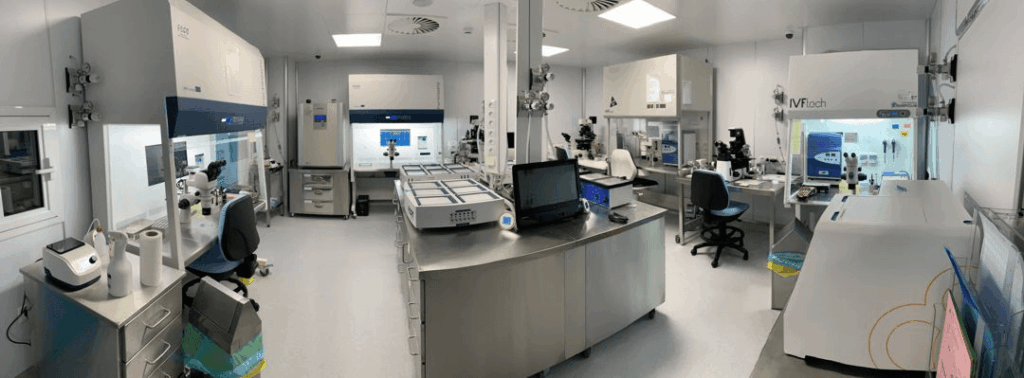
A day in the lab

Date: Upon Request Spend an entire day in a highly successful IVF laboratory and observe our experts in action. Under the guidance of your dedicated mentor, you will shadow our embryology team throughout their daily routine, gaining real-time insight into cutting-edge
Development

Clinicians and Fertility Specialists

01.

through specialized modules:

  • Effective communication within your team and with your patients
  • Effective and practical flow charts in infertility investigation and management
  • Shared and informed decision making with your patients
  • Clinical aspects of Risk Management
  • Clinical Guidelines: develop, adopt and/or adjust current clinical evidence into daily practice

through Targeted modules:

A. Setting up specialized clinics:

  • Advanced Maternal Age
  • PCOS
  • Poor Responders
  • Recurrent Implantation Failure

B. Introducing new clinical services

  • endometrial studies

Clinical Embryologists/ Andrologists/ Geneticists through:

02.

A. International Workshops and advisory meetings on the implementation of state of the art assisted reproduction techniques.

Modules

  • Preimplantation Genetic Diagnosis
  • Total Quality Control and Risk management in IVF laboratories
  • Cryopreservation of gametes, embryos, blastocysts and reproductive tissues: daily practice in your lab.

B. Individual or group, hands-on courses for training in assisted reproduction techniques.

Modules

  • Intracytoplasmic Sperm Injection
  • Embryo and Blastocysts Vitrification
  • Embryo and Blastocyst Biopsy
  • Azoospermia investigation and testicular tissue processing
  • Exploring sperm Genetics with Fish and DFI test
  • Risk Management and Quality assurance in the lab
  • Troubleshooting in ART labs
  • Genetic Counseling for PGT cases

IVF Managers

03.

Modules
Α. The Organization & its People

  • A1: Ensuring a value-driven leadership in health clinics
  • A2: Building a sustainable services brand: The inside out approach
  • A3: Developing and measuring people’s performance
  • A4: Techniques to develop and improve the communication process

Β. The Organization & its Guests

  • B1: Re-structuring your services blue print: how and why
  • B2: Enhancing the customer experience
  • B3: Managing service quality and customer satisfaction
  • B4: Creating a competitive advantage through service optimization
  • B5: Integrating your company’s communication efforts towards a H.O.T. customer interaction

IVF Units

04.

Tailor made presentations, interactive workshops, and advisory sessions for:

Modules

  • Setting up a new IVF Facility
  • Development of the existing IVF facility
  • Service improvement through personnel training
  • Safer practices through the implementation of an efficient Unit
  • Risk Management program for ART units
  • Support on trouble shooting and crisis management.
  • Standard Operating Procedures (SOPs), defining auditable standards
  • Key Performance Indexes (KPIs)
    Statistics: monitoring the unit’s global performance