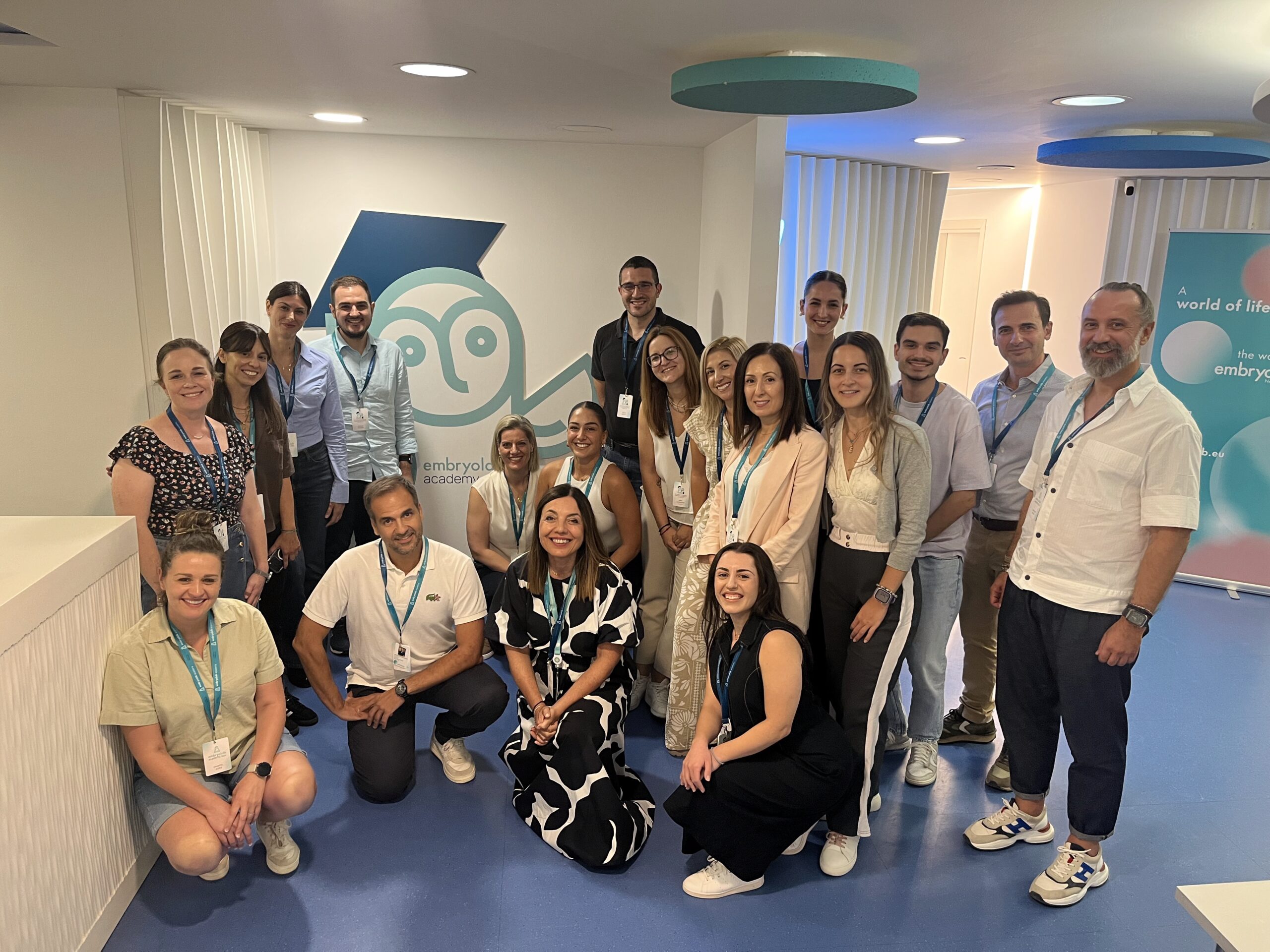


Twelve internationally known IVF experts presented good practices and tools for advancing safety and performance of the ART practices.
“Safe Practices in ART Labs” Speakers & Panelists answer all the chat room questions
Indeed: the suppliers have the certificates. These certificates are a quality criteria, it means that the products complies to the what the vendor says it complies. Often, this is enough. MEA testing is not the holy grail. Sometimes you have used a plastic dish or tube for many years and your results are fine. Above all, MEA adds to the cost. SO, If you are happy with your products, then stick with them .Do you want to look for an alternative: check out vendors that did some more testing and validate the plastics in your own lab. Take a lot at the behavior of the droplets of medium in these new dishes, what is the temperature in the droplets. Can you still use the same amount of medium or do you need to size down or scale up the volume of the medium. All of these things can change your current practice and these changes can have a dramatic outcome -> both positive or negative. So my advice: if you are happy: look for an alternative (it is always good to have a backup plan) -> and take the time to check a lot of things. A lot of labs use different dishes….so it is not 1 size fits all, because we all use different media etc….
Pushing a vendor to get MEA testing will only add to the cost and probably not the quality of an already good working plastic.
Also: contact colleagues and find out what their experiences are with dishes.
You should make sure that there are no embryotoxic products in the products – or that the concentrations are within toxicity range. You can have a look at Homepage – ECHA (europa.eu) and check pubmed for papers -> Do not use a date selection as some of the papers can be quite old and contain interesting data.
The problem with certain toxicities is that they are tested on mouse. The rule I always use := If a product is toxic for mice embryos, it is not to be used for human embryos. On the contrary, if no toxicity is reported in a mouse setting, you cannot assume that it is perfectly fine for human embryos. In this case, I always try to get references of the vendors : so ask your vendor if the product has been (or is being) used in IVF labs and if you can get the references of that lab. Sometimes there are other issues, like stickiness of the product.
Nowaydays, Zebrafish are also used for toxicity testing and there are some interesting papers on this.
No, we export data from our fertility software and analyse it in Excell through validated spreadsheets. This means that a format is made with all the calculations and diagrams and we only need to paste the same update export and the analysis are done automatically. It takes some time to set up these validated spreadsheet, but in the end it is worthwhile because you do the work 1 time and can run the indicators efficiently periodically.
A center usually has criteria for minimum embryo quality for embryo transfer and or cryopreservation. Hence the EUT takes these minimum criteria into account, so it does give you an idea of the quality of the embryo culture. If you normally have an average of 40% EUT and it drops to 20%, without a change in patient population, than you most certainly have an issue in the culture.
This makes it difficult indeed. Blastocyst rates can give you an idea of the culture quality if you do not make a selection based on day 3. However, if you have always had this policy in your lab, than you can make a comparison, but I would move away from this policy and give all embryos the possibility to reach blastocyst stage.
It is important to move away from ‘patient’ related way of looking at indicators. If you have look at your culture on a yearly basis and calculate the usable blastocysts on a monthly basis, and the SD of this, than you have a good idea of what to expect. Of course you need enough data -> 100 cycles is probably a good number.
A lot of labs state: it is related to the patient, but on a monthly basis, you will not suddenly only have aged patients. Although this can be the case, it is often exceptional.
If you do have a lot of fluctuations in age of poor response patients, than make you selection based on age and ovarian response. Be aware, that if you select of specific patient cohort, that you are only looking at these patients.
If you have time lapse in your lab, than use the images to scroll back and forth. If we see a 3PN even outside the window of 16-18h, we consider it 3PN. One has to realize that a lot of fixed timings have been determined based on making the lab work possible in an era without time-lapse. I believe that we are going to move away from these fixed timings when time-lapse is more accessible for more labs.
In all honesty, not enough. On the other hand, the operator indicators (like 2PN and degeneration rate at ICSI) is shared every time we run the indicator. Every operator gets his/her own report. We are not there yet to display everyone’s results with names in 1 big report. But we are moving towards this. It takes time for staff to adjust to this, but in due time we will be there.
You have to check this in your own setting using the ICSI dish that you use. Sometime ICSI dises are flat, sometimes they have a little edge -> this makes a difference in temperature conductance. So buy a temperature sensor and measure inside the droplets to make sure it is 37°C.
Basic semen analysis with morphology staining. Look up examples in literature like https://doi.org/10.1111/andr.12081.
If you have peculiar cases in the lab: make pictures and distribute them, so that novices learn too. Sometimes an isolated contamination from a sperm samples happens 1 in a few years….so take this moment to teach your staff.
This is the minimum: Temperature checks on all heated stages and in droplets when dishes are on the heated stages – IQ/OQ on all new equipment (can be done by the vendor upon installation) –VOC measurements (or have VOC capturing in the lab, on the incubators and in the room) and you need to culture spare embryos or 1pn or 3pn embryos -> there should be cleavage in these embryos otherwise you have a toxicity in the new lab.

It’s difficult – but we should track KPIs frequently – using appropriate error bars on the control chart. At a minimum, monthly tracking, we do it fortnightly. If a clinic only has 20 retrievals or transfers in a month, then the error bars will be very large. As I showed in the example – this means you can have periods of poor outcomes that are just by chance, not that something is wrong.
Patient related factors will sort out with large sample size. It’s unlikely that one clinic has patients who generally make poor quality blastocysts than another clinic. We find some patients make poor quality blastocysts, and these patients bring down the average, but when there are enough patients in the data point (at least 30), then their impact is minimal.
Nothing specific asked – but I will say for ICSI, Vienna uses per egg injected, for IVF, egg inseminated, which likely includes immature eggs. For an accurate comparison of IVF and ICSI – best to use eggs collected for both. Next best – make sure to remove immature eggs at fert check from the equation for IVF cycles.
It is a 3PN and should not be used unless genetically tested.
Yes – of course – especially if performing cleavage stage transfer or a high rate of fresh day 5 transfers. Clinics that have a low day 5 rate will be transferring more morulae and stage 1 or 2 blastocysts on day 5.

This is a rather complex question, as it is important to define whether we are referring to fresh embryo transfers and chance of livebirth, or freeze-all and cumulative livebirths. Although data from the HFEA database suggest that around 15 oocytes collected at OPU give the best chance of a live birth, a new registry from the Australian and New Zealand Assisted Reproduction Database suggests that it is female age which dictates the optimum number of oocytes in order to achieve a maximum cumulative live birth rate. Indeed, it was suggested that the number of oocytes considered ideal for ages 18-35 would be 25, for ages 36-44 more than 30 and for ages above 45 around 9.
This is a very interesting approach and sounds like it could have a place in mild stimulation schemes.
Ideally, this should be a daily meeting, where all ongoing cases are discussed, including theatre list, fertilization checks and embryo transfers. Then, maybe once weekly, I would strongly suggest that clinicians and embryologists get together to discuss performance, quality issues and risk management.
This will depend on the workload of the unit, surely. For an average IVF unit which runs some 500 cycles a year I would think that 3-monthly meetings for presenting and discussing kPIs with operators and the unit is a reasonable period of time in terms of numeric samples. The shorter the meetings the smaller the number of cases performed and the higher the risk of overestimating/underestimating performance.
This is a really good question. I think we should not be approaching performance as either/or, but both per case and in total in preset times. Performance per case does not mean that all cases need individual consideration, of course, rather, it is about those cases where unexpected performance occurred and need our closer attention in order to identify areas we can improve. Performance in terms of total cases provides an index of the general clinical and laboratory performance and helps with monitoring in a clear and comprehensive way.
Refusal to participate can be based on conscientious objection. To avoid such instances, prior to employment, we recommend that the embryologist is given a full description of the clinic’s activities, so that they can decide if they are agreeable to participation. Ultimately, the decision depends on the national laws of individual countries, but generally unlawful discrimination against a patient on the basis of a protected characteristic would not be fair.
We are often asked this question, but it is difficult to give a number, as many factors need to be considered relating to the work patterns. For example, 2 embryologists should be able to handle 150 cases if they are spread evenly over 1 year. However, if a clinic has 150 cases concentrated into two short periods of 3-4 days, then this could be too much.
Structured learning is the way to go. For me, it is important that trainees understand the importance of every task performed in clinical embryology. The patients put their trust in us, and we should take the very best care of their gametes and embryos.
With many different people, you can have such a wide range of views. This can be a great opportunity to learn. Have you considered team-building exercises? If you agree on the same goal, then a team working together is the best approach.
Yes – of course – especially if performing cleavage stage transfer or a high rate of fresh day 5 transfers. Clinics that have a low day 5 rate will be transferring more morulae and stage 1 or 2 blastocysts on day 5.

The system reported here is designed to tag embryos exclusively during their manipulation and in vitro culture in the laboratory, so that each individual embryo can be identified and tracked at any point of the ART procedure. However, the embryos should be free of the barcodes before they implant into the maternal uterus. It basically uses biofunctionalized polysilicon which sticks to the outer membrane of the Zona pellucida. Barcodes were read and identified using an inverted microscope and achieved 94-98% identification rates.
Novo, Sergi & Penon, Oriol & Barrios, Leonardo & Nogues, Carme & Santaló, Josep & Durán, Sara & Gómez-Martínez, Rodrigo & Samitier, Josep & Plaza, Jose & Pérez-García, Luisa & Ibáñez, Elena. (2013). Direct embryo tagging and identification system by attachment of biofunctionalized polysilicon barcodes to the zona pellucida of mouse embryos. Human reproduction (Oxford, England). 28. 1519-27. 10.1093/humrep/det083.
Witnessing protocols when any of the following clinical or laboratory procedures:
(a) Collecting eggs
(b) Collecting sperm
(c) Preparing sperm
(d) IVF or ICSI insemination
(e) Transferring gametes or embryos between tubes or dishes
(f) Transferring embryos
(g) Inseminating a woman (IUI)
(h) Gametes or embryos cryopreservation and removal
(j) Disposing of gametes or embryos
Patient samples can be tracked as they enter and leave cryo storage. The RI Witness RFID system converts data to cryo-suitable barcode identification labels. Durable, laboratory-proven Brady labels are used to identify the vials or vitrification straws.On thawing/warming, the barcode information is linked automatically with the embryo thaw dish. I personally also double check manually along with the witness system.
I have seen no increase in time spent in the lab doing electronic witnessing. I run a high volume center and I feel that the benefits that electronic witnessing brings to the laboratory outweigh any trivial misconceptions. The risk of errors in a high volume setup is higher especially if you are understaffed or have under qualified staff, even with qualified professionals human error is still a possibility and that is what electronic witnessing eliminates.

The tanks have automatic refilling system put in place. If the automatic refilling does not work. Our system has an autonomy that range from two to three days.

While our cryotanks are on wheels, we did not plan to have to evacuate them. We work in tall buildings in NY and the thought of brining tanks down the stairs seems impossible.
Making the decision is often the most deliberative and time consuming. Once a decision is made, we flew into action.
We finally evaluated the events when we recovered. We froze a lot of embryos and eggs that had to be organized with thaws, this took several months to accomplish and wait for pregnancy results. Having communication and good relations with competitors was so important, as was purchasing the extra liquid nitrogen and having battery backups in our lab of course. The hospital had its own response months later as it was closed for 6 months.

Thank you for the question. First of all, I would suggest checking that the optimal timing of fertilization check is respected. In order to avoid discarding fertilized oocytes, monitoring these oocytes for other 24 hours is needed. Secondly, to check culture conditions and temperatures during your procedures is recommended. Thirdly, to verify if this issue is related to an operator is suggested.
In my talk, I showed an example of troubleshooting related to the low fertilization. In my experience, I dealt with an increased number of 3PN due to an increased temperature of the incubator.
I would suggest checking the culture conditions. Concerning this topic, I would like to suggest reading this article by Hammond and Morbeck (2019) (https://doi.org/10.1093/humrep/dey395).
The optimum temperature depends on various factors: type of thermoplate, ambient temperature, position of the micromanipulator (avoid direct air flow). First you should calibrate the thermoplate at 37°C (direct contact) and then measure the temperature in the oil-covered drop and calibrate to reach 37°C in the drop.
The ideal solution would be a Pt-1000 (very low uncertainty), but the problem is that such a small one is almost impossible to find and may be very expensive. Thermocouples have very high uncertainties, the best ones are around 0.5, we found a thermistors with an uncertainty of 0.15.
I would first reconsider the timings of the insemination and related fertilization checks. If the fertilization check is routinely carried out after 17 hours post insemination (in the absence of time-lapse systems) it is very likely that the pronuclei have already disappeared (you could eventually assess a few hours later whether the embryos are cleaving correctly to see if it was just a question of a late check).
If the fertilization check was carried out at 16-18h post ICSI, I would evaluate possible issues in spermatozoon immobilization (due for instance to a change in the type of ICSI needle used or an unintentional change in the angle of the micromanipulation system).
VOC’s are measured in Parts per billion. The levels for embryology labs should not exceed 500 PPB. It is more important to assess the presence of Aldehydes in the lab rather than purely focus on total VOC’s.
Fertilisation assessment not being done within the time ranges ie 16-18 hrs for ICSI and 18-20 hrs for IVF. If true 1 PN’s are noted then may need to look at ICSI method and oocyte activation issues or even the treatment of sperm prior to Insemination/ Injection.
This is not common. Most labs are only informed of the livebirth rather than any long term perinatal follow ups. However basic live birth information should be passed onto the lab so that it can be registered with the relevant regulatory authorities. In case of Donor gametes are used then this becomes more important in cases of a genetic abnormality being detected at birth which may be passed on from the donor and hence would need the donor being blocked if applicable.

Workshop’s archived page
To read archived Workshop’s Page please click here